




Online reward programs have become a common part of the internet experience. From loyalty points on shopping sites to promotional offers from brands, these programs are everywhere, and yet most people don’t fully understand how they actually work behind the scenes.
In simple terms, an online reward program is a marketing tool. Companies use these programs to attract new customers, keep existing ones engaged, or promote a product or service through a partner network. Depending on the program, participants might be offered points, discounts, vouchers, or other incentives in exchange for completing certain actions, such as signing up, answering a survey, or trying out a product.
There are many different types of promotional programs in use today, ranging from simple loyalty schemes run directly by a brand to more complex affiliate-based campaigns involving multiple partners. Understanding the general structure of these programs can help you make informed decisions and avoid confusion when you come across one online.
In this guide, we’ll walk through what online reward programs are, how they typically operate, who can usually take part, and what you should check before getting involved with any promotion.
What Is an Online Reward Program?
An online reward program is essentially a structured marketing campaign. Businesses design these programs to achieve specific goals, such as increasing brand awareness, growing their customer base, or encouraging repeat engagement with their products and services.
At a basic level, these programs fall into a few broad categories:
Marketing campaigns. Many reward programs are part of a larger marketing strategy. A company might run a limited-time promotion to introduce a new product, boost holiday sales, or increase app downloads. These campaigns are usually time-bound and tied to specific business objectives.
Consumer promotions. These are offers aimed directly at everyday users, such as cashback deals, referral bonuses, or point-based loyalty systems. Consumer promotions are designed to reward customer behavior, such as making a purchase or leaving a review.



Brand partnerships. In some cases, two or more companies collaborate to create a joint promotion. For example, a retailer might partner with a payment provider to offer bonus rewards, or a service platform might team up with an advertiser to run a co-branded campaign. These partnerships allow both parties to reach a wider audience.
Regardless of the category, the underlying idea is the same: the company offering the reward benefits from increased visibility, engagement, or sales, while the participant potentially benefits from the incentive being offered.
How Do These Programs Usually Work?
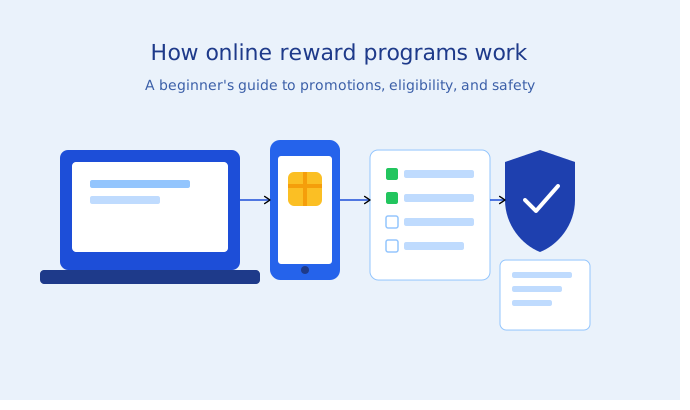
While every program has its own specific rules, most online reward programs follow a similar general process. Here’s a broad overview of the typical steps involved:
- Visit the official promotion. Participants usually start by visiting the official page or platform where the promotion is hosted. This could be a brand’s own website, an app, or a dedicated promotional landing page.
- Review the eligibility requirements. Before doing anything else, it’s important to check whether you actually qualify for the promotion. Eligibility criteria can vary widely from one program to another.
- Follow the instructions provided by the promotion. Each program will outline specific steps needed to participate, such as creating an account, entering certain information, or completing a task.
- Complete the required steps described by the provider. This might involve making a purchase, referring a friend, filling out a form, or another action defined by the program.
- Check the provider’s terms for details about any rewards or benefits. The exact nature of the reward, how it is delivered, and any conditions attached to it are usually explained in the official terms and conditions of the promotion.
It’s worth noting that this is a general outline, and the specific steps for any individual promotion can differ significantly. Some programs are instant, while others may require verification or a waiting period before any reward is issued. Always refer to the specific instructions provided by the program you’re looking at, rather than assuming all promotions work identically.
Who Can Participate?
Not every online reward program is open to everyone. Providers typically set eligibility rules to ensure the promotion reaches the right audience and complies with relevant regulations. Some of the most common factors that affect eligibility include:
Country restrictions. Many promotions are limited to residents of specific countries or regions due to legal, regulatory, or logistical reasons. A program available in one country may not be accessible in another.
Age requirements. Most reward programs require participants to be above a certain age, often 18 years or older, in line with standard consumer protection practices.
Device compatibility. Some promotions are designed for specific platforms, such as mobile apps, and may require a particular operating system or device type to participate.
It’s important to emphasize that these requirements vary significantly from one program to another. There is no universal standard, so the only reliable way to know if you qualify is to check the specific eligibility criteria listed by that particular provider.
Things to Check Before Participating
Before getting involved with any online reward program, it’s a good idea to take a few precautionary steps. This can help you avoid misunderstandings and make a more informed decision.
Read the terms. Every legitimate promotion should have clearly published terms and conditions. These usually explain how the program works, what is required of participants, and how rewards are distributed.
Understand the eligibility criteria. As mentioned earlier, eligibility rules can vary. Take a moment to confirm that you meet the requirements before investing time in any promotion.
Review the privacy policy. If a program asks for personal information, it’s worth checking how that data will be collected, used, and stored. A trustworthy provider will have a clear and accessible privacy policy.
Verify that you’re on the official provider’s website. Unfortunately, scams sometimes imitate legitimate promotions. Always double-check the web address and look for signs that you’re on the official, verified page before entering any personal details.
Taking these steps doesn’t take much time, but it can make a meaningful difference in ensuring a safe and informed experience.
Frequently Asked Questions
- Are all reward programs the same?
No. Reward programs can differ significantly depending on the company running them, the type of incentive offered, and the actions required to participate. Some are simple loyalty point systems, while others involve more detailed steps or partnerships between multiple businesses. - Why do some promotions have eligibility requirements?
Eligibility requirements are usually set to comply with legal and regulatory obligations, manage program costs, or ensure the promotion is reaching its intended audience. These rules are set independently by each provider. - Do availability and terms vary by location?
Yes. Many online promotions are region-specific, meaning the availability, rules, and even the type of reward offered can change depending on where the participant is located. It’s always best to check the terms relevant to your own location.
Conclusion
Online reward programs are a widely used marketing tool that can offer genuine value when approached with the right understanding. However, since these programs vary so much in structure, eligibility, and terms, it’s important not to assume that one program works the same way as another.
Before deciding whether to participate in any promotion, take the time to understand how it works, confirm your eligibility, and review the provider’s official terms and privacy policy. Being informed is the best way to navigate these programs confidently and safely.
Learn More
If you’d like to learn more about partner programs related to this topic, you can review additional information before visiting the provider’s website.